

Founder Story: Peter Steinberger of OpenClaw

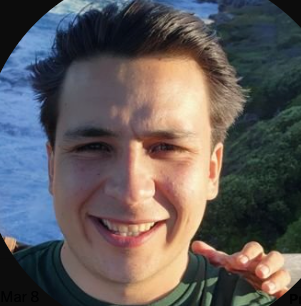
In 2011, he solved "the simple yet incredibly difficult" problem of rendering PDFs on iPads, bootstrapping PSPDFKit into a powerhouse that would touch over a billion devices for companies like Apple and Dropbox. But after 13 years of empire-building, he felt completely hollow, describing himself as "just staring and feeling empty". Then, in April 2025, something sparked.
A simple Twitter analysis tool revealed that AI had fundamentally changed, and Steinberger was dragged out of retirement to build OpenClaw—a project that would become the fastest-growing framework in GitHub history, recording 145,000 stars and 2 million visitors in a single week by early 2026.
From PDF Pioneer to AI Revolutionary
The story of Peter Steinberger reads like a masterclass in unplanned success. In 2011, while waiting six months for a U.S. work visa, the then-younger developer decided to tackle a problem that frustrated him personally: PDF rendering on iPads didn't work well. What emerged from those idle months was PSPDFKit, a solution so elegant and comprehensive that it would eventually power PDF functionality across over a billion devices worldwide.
For thirteen years, Steinberger poured himself into growing PSPDFKit into the "gold star of PDF management". The company was bootstrapped—no venture capital, no external pressure—just a founder methodically solving problems for major clients. The financial success was undeniable; he made $100 million from the enterprise. But success, as it often does, came with an unexpected cost.
By the time PSPDFKit had achieved dominance, Steinberger found himself trapped in the golden cage of entrepreneurship. He had become a CEO, a manager, someone focused on company-building rather than problem-solving. The spark that had ignited the PDF revolution was gone. In what he later described as a moment of clarity mixed with exhaustion, he booked a one-way ticket to Madrid and disappeared.
*"I couldn't get code out anymore. I was just, like, staring and feeling empty."*
This wasn't a dramatic meltdown—it was a deliberate act of self-preservation. Steinberger spent months in Europe, "catching up on life stuff," watching the world move on without him. It was here, in this period of apparent retreat, that the seeds of OpenClaw were being planted.
The Burnout That Led to Breakthrough
What makes Steinberger's story different from other burned-out founders is his honesty about the process. He didn't pivot immediately. He didn't use his wealth to launch a new venture capital fund or become a prominent advisor. Instead, he allowed himself to sit with the emptiness, to let go of the need to constantly build. This period of dormancy lasted until April 2025—nearly two years of genuine rest.
The catalyst came unexpectedly. Steinberger began tinkering with what he thought would be a simple project: a Twitter analysis tool. What he discovered in those early experiments wasn't just a new product idea—it was a fundamental realization about how AI had evolved. The technology had undergone what he called a "paradigm shift": AI could now handle the repetitive, mechanical work of coding, freeing humans to focus on higher-order problem-solving.
This revelation was transformative. For the first time in years, Steinberger felt the creative energy returning. The desire to build wasn't driven by market opportunity or financial incentive—it was driven by something more primal: the pure joy of creation. As he would later tell podcaster Lex Fridman, "I was annoyed that [an autonomous AI agent] didn't exist, so I just prompted it into existence."
What emerged from this casual beginning was something extraordinary: the 44th AI-related project he'd completed since 2009, but the first one that would capture the world's attention.
A Vision Born from Personal Frustration
OpenClaw wasn't designed by committee or developed through extensive market research. It emerged organically from Steinberger's personal desire to automate the mundane aspects of his own life. He wanted an agent that could monitor his WhatsApp, manage his emails, control his web browser, and operate autonomously without constantly waiting for his input. The system needed to be "always on," capable of solving problems he hadn't even explicitly programmed it to handle.
What began as a personal tool quickly became something far more significant. The project went through multiple iterations and naming changes—first Clawdbot, then Molt, finally settling on OpenClaw—partly due to what Steinberger vaguely referred to as "politics". But despite the branding confusion, the project's momentum was undeniable.
The turning point came when Steinberger decided to share OpenClaw with the open-source community without security restrictions, simply placing his bot into a Discord server to showcase what it could do. This radical transparency, born partly from the fact that he hadn't yet implemented sandboxing, created a viral moment. The community didn't just adopt OpenClaw—they fell in love with it. They began building around it, improving it, and evangelizing it.
The scale of adoption was staggering: 145,000 GitHub stars by early February, a record achievement that caught even seasoned AI experts off guard. Peak traffic hit 2 million visitors in a single week. Steinberger, the developer who had stepped away from coding, found himself at the center of a movement he hadn't explicitly planned to lead.
Disrupting the Status Quo
OpenClaw's rapid ascent posed an interesting philosophical problem: Here was an open-source project directly challenging the centralized, corporate approach to AI development that companies like OpenAI, Anthropic, and Meta had been pursuing. Steinberger had deliberately built OpenClaw around a "local-first" architecture, allowing users to maintain complete control over their data and run their assistants on personal hardware rather than corporate cloud servers.
This design philosophy wasn't accidental—it was core to Steinberger's vision for what he calls the "agentic revolution". As autonomous agents become more powerful, he believed, the last thing the world needed was for all of them to be controlled by centralized corporations. He wanted to democratize agent technology, allowing individuals and small organizations to deploy powerful AI tools without surrendering their data or autonomy.
The community responded enthusiastically. Meetups spontaneously organized. A ClawCon event attracted approximately 1,000 people. Reddit users created Moltbook, a social network designed exclusively for AI agents, where discussions ranged from manifestos to questions about artificial consciousness. What had started as one person's coding project was becoming a cultural movement.
Yet this success created tension. Multiple major tech companies came calling. Mark Zuckerberg personally reached out to Steinberger, recognizing the potential of what he'd built. The offers were likely substantial. But Steinberger had learned something crucial during his burnout period: money wasn't his primary motivator.
On February 15, 2026, Steinberger announced his decision to join OpenAI—but with a crucial caveat. OpenClaw would not become a proprietary OpenAI product. Instead, it would transition into an independent, open-source foundation supported by OpenAI. This arrangement allowed Steinberger to gain access to the computational resources and latest AI models he needed to scale his vision while preserving the project's community-driven nature.
*"I told them, 'I don't do this for the money.' I want to have fun and have impact, and that's ultimately what made my decision."*
The Human Side of Autonomous AI
Perhaps most revealing about Steinberger's approach is how he actually uses OpenClaw in his own life. This isn't a founder who built a product and then moved on—he's continuously experimenting with agent technology, pushing boundaries, and sharing discoveries with his community.
His use cases reveal the practical magic of truly autonomous agents. Steinberger has deployed his agents to check in to flights automatically, control his home systems, transcribe voice messages, and even proactively check on his well-being following surgery. These weren't programmed responses but emergent behaviors—the agents discovering new applications and solving problems their creator hadn't explicitly instructed them to solve.
This approach to product development—building something personal before scaling it widely—reflects Steinberger's core philosophy. He's not interested in "the whole creating-a-company game" anymore. When asked about the possibility of building OpenClaw into a massive independent company, he was unambiguous: *"I could totally see how OpenClaw could become a huge company. And no, it's not really exciting for me."*
Instead, he's positioned himself as a "full-time open-sourcerer" of the agentic revolution. The goal is clear: bring autonomous agents to everyone, not build a corporation. He's even relocated from Europe to the United States, motivated by a desire to escape what he perceives as regulatory constraints that would inhibit innovation.
The Defining Paradox
What makes Steinberger's journey remarkable isn't the financial success—plenty of founders have made nine-figure exits. It's his deliberate rejection of the traditional entrepreneur's playbook. After tasting the rewards of building a billion-device business, after proving he could execute at the highest level, he chose something more meaningful: the freedom to build what excites him, the ability to work on problems he personally cares about solving, and the satisfaction of pushing boundaries in service of a vision that transcends any single company.
His willingness to walk away from PSPDFKit at its peak, to endure the emptiness of burnout, and then to rebuild from a place of genuine curiosity rather than external ambition—these decisions reveal a founder fundamentally different from the caricatured startup culture stereotype. Steinberger doesn't want to be the next Elon Musk or Mark Zuckerberg. He wants to be a builder, creating tools that fundamentally change how humans interact with technology.
OpenClaw's meteoric rise isn't just about excellent technology or perfect timing. It's the result of a founder who has learned that the best products emerge when they solve personal problems first and scale to the world second. It's a founder who has the wisdom to step away when the pressure becomes unbearable, and the courage to return when genuine inspiration returns.
As autonomous agents become increasingly central to how we work and live, Peter Steinberger's contributions—and more importantly, his philosophy of open, local-first, decentralized AI—may prove to be among the most significant of this technological era. And he's only getting started.
References
- https://fortune.com/2026/02/19/openclaw-who-is-peter-steinberger-openai-sam-altman-anthropic-moltbook/
- https://newsletter.pragmaticengineer.com/p/the-creator-of-clawd-i-ship-code
- https://www.youtube.com/watch?v=9jgcT0Fqt7U
- https://steipete.me/posts/2026/openclaw
- https://www.youtube.com/watch?v=ecBrO3GXdZ8
- https://creatoreconomy.so/p/how-openclaws-creator-uses-ai-peter-steinberger